The prophet Habakkuk, in today’s First Reading, stresses the power of faith — he also gives us a clearer idea of what exactly faith is.
Habakkuk lived in the 6th century BC, when Israel had been conquered by the Babylonians and the majority of Jews had been deported. It was as if a hurricane, like Katrina, had swept over not just one city, but the entire country. Habakkuk is in the middle of it all, he sees the devastated city and countryside, strewn with corpses, burned and barren.
Habakkuk feels the pinch of poverty and destruction. And he does the most natural thing in the world: he complains to God about it:
How long, O Lord? I cry for help, but you do not listen! More…
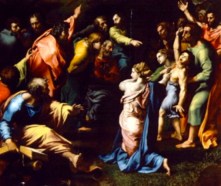 The picture above, taken from the bottom portion of Rafael’s Transfiguration,could stand on its own as separate painting. As a composition, it appears to be complete. Yet even to the viewing eye, it certainly lacks something. By itself, its meaning is not clear.
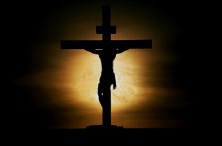
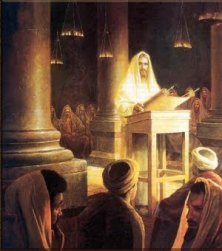 Today’s Gospel reading begins with the opening of Luke’s Gospel, then leaps forward four chapters to the account of Jesus’ revealing himself as the Christ foretold by the prophets. The joining of these passages is significant for two reasons.

 The author was being rather tongue and cheek and admitted that she understood that many Christians would not see things the same way she sees it, so she asks, “What am I missing?”
  The day after the election provided even more inspiration than what we read on Election Day. If Tuesday was about ‘standing up’, Wednesday’s Reading from the Liturgy of the Hours, Office of Readings, told us the way to fight.
 Biltrix